

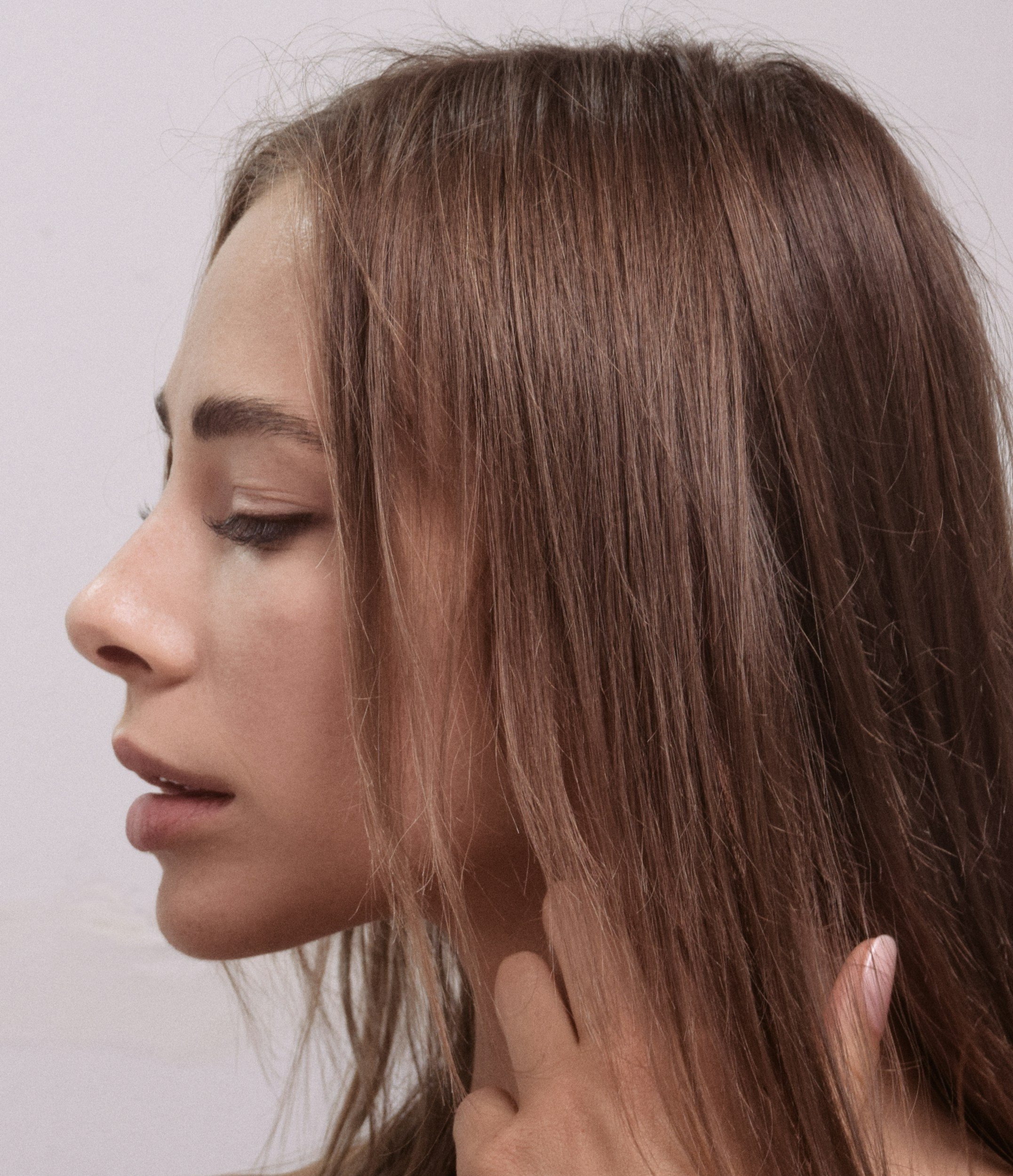
Hair Loss in Women
Hair thinning in women may be related to elevated androgens (such as DHT), PCOS, stress, insulin resistance, or nutrient deficiencies.
Functional medicine can help identify the root cause.
Acne
✳︎
Thinning Hair
✳︎
Heavy Cycles
✳︎
Weight Gain
✳︎
Anxiety
✳︎
Acne ✳︎ Thinning Hair ✳︎ Heavy Cycles ✳︎ Weight Gain ✳︎ Anxiety ✳︎
The Atlast Project →
“What is PCOS?
Polycystic Ovary Syndrome happens when the body’s hormone signals become out of balance — especially the communication between the ovaries, insulin, and androgen hormones (like testosterone and DHT).
Despite the name, many women with PCOS do not actually have ovarian cysts, and not all are overweight. Some are very thin and still have significant hormone symptoms.
Common symptoms of PCOS:
Symptoms can vary a lot from person to person, but common ones include:
irregular periods
skipped ovulation
acne
scalp hair thinning or hair loss
increased facial/body hair
weight gain or difficulty losing weight
fatigue
sugar cravings
anxiety or mood swings
trouble sleeping
infertility
PMS symptoms
darkened skin in body folds
bloating
A thin woman may mainly notice:
acne
hair shedding
high DHT
painful periods
PMS
irregular cycles
without ever gaining weight.
Different types of PCOS
1. Insulin-resistant PCOS
This is the most common.
The body makes extra insulin, and insulin stimulates the ovaries to produce more androgens.
Common clues:
weight gain around the middle
cravings
fatigue after meals
elevated fasting insulin
irregular periods
Even thin women can have this type.
2. Adrenal PCOS
The adrenal glands (stress glands) contribute more androgen hormones.
Common clues:
high stress
anxiety
poor sleep
elevated DHEA-S
acne
hair loss
normal body weight
This can happen even when insulin looks normal.
3. Inflammatory PCOS
Chronic inflammation can worsen hormone signaling.
Possible contributors:
gut dysfunction
food sensitivities
chronic stress
environmental toxins
poor diet
autoimmune issues
Often presents with:
fatigue
bloating
acne
irregular cycles
brain fog
4. Post-pill / ovulatory dysfunction type
Some women develop PCOS-like symptoms after stopping hormonal contraception because their natural ovulation hormones take time to rebalance.